Czech Nymphing
Why use Czech Nymphing?
Its a deadly method for catching fish, especially Trout and Grayling. It entails catching nymphs near to the riverbed, where aquatic insects, the fish's primary food source, spend 99 percent of their lives. Picking out and inspecting a few submerged stones or patches of vegetation can reveal an abundance of food crawling over them, such as nymphs, shrimps, and caddis larvae. All of these are essential components of a fish's diet.
Czech nymphing, also known as Czech-style nymphing or Czech nymphing technique, is a specialized fly fishing technique that originated in the Czech Republic. It is a highly effective method for catching fish, particularly trout, in fast-moving or turbulent rivers.
Czech nymphing is characterized by using heavily weighted nymph flies and relying on the natural drift of the flies in the current to entice strikes. Unlike traditional fly fishing techniques that involve casting and floating the fly on the water's surface, Czech nymphing involves short casts or tight-line presentations directly upstream or across the current.
The technique typically involves a long, lightweight fly rod (typically 10 to 11 feet in length) paired with a thin fly line or a leader-only setup. The flies used in Czech nymphing are typically tied with lead or tungsten wraps to provide weight, allowing them to sink quickly and stay close to the riverbed where fish are often feeding.
Anglers use a tight line connection between the fly line or leader and the flies to maintain direct contact with the nymphs. By closely watching the line or using a visual indicator, they can detect subtle strikes or changes in the drift and respond quickly.
Czech nymphing requires good line control, excellent technique, and the ability to read the water and understand fish behavior. It is a popular technique among competitive fly anglers due to its effectiveness in catching fish in challenging conditions.
While the name suggests its Czech origin, Czech nymphing is now practiced worldwide and has become a prominent nymphing technique in fly fishing communities around the globe.
Tackle required to Czech Nymph fish
Rod
To get started nymphing, you don't need a specific Czech nymphing rod. For most rivers and streams, a normal 9 to 10 foot fly rod rated from #3 to #6 weight would suffice. I began fishing with a 10ft 6# medium action rod.
Investing in a soft-medium action rod (10ft, #3 weight) if you've progressed to performing a lot of nymphing is useful for a variety of reasons:
Drift length is determined by your reach, and a longer fly rod allows you to increase your reach and so cover more water. Lightweight soft-tip fly rods are intended to detect takes and bend when you strike to place the hook.
A long soft-tip fly rod makes playing huge fish at close range easier because it absorbs the shock when the fish makes a rush for escape.
Additionally, choose a rod that is as light as feasible within your budget to reduce arm discomfort.
Reel for nymph fishing
You may begin Czech nymphing with a regular fly reel that is weighted appropriately for the rod. Unlike other types of fly fishing, you will seldom have any line left on the reel. As a result, choose a reel with a responsive and smooth drag mechanism that is simple to adjust.
Fly line for Nymphs
You may begin Czech nymphing with a regular floating fly line matched to the rod, just as you can with the rod and reel. This is how I got started a few years ago. However, I now use an Airflo SNF Euro Nymph line, which has a small diameter (0.6mm) and is much simpler to manage in windy situations.

When to fish the Czech nymph style
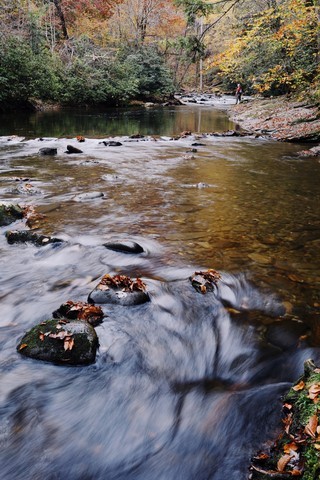
Czech Nymphing is a fly fishing method that may be used all year round to capture trout and grayling. This method is effective when...
There are no signs of trout and/or grayling eating flies in or on the surface,
The river is high and/or coloured, and other ways of fishing the fly are tough.
During the autumn, winter, and spring, I frequently start the day by fishing Czech nymphs until I see fish accepting flies at the surface. I'll either switch to wet or dry fly fishing at this time.
Where to fish your nymph
Short line nymphing methods are essential on many UK rivers (e.g. Welsh Dee, River Ribble, River Calder, etc.) since they will provide you with a wealth of unique experiences.
Where there is adequate flow for the nymphs to tumble along the riverbank, Czech nymphing works well. As an example,
riffles, quick runs, deep glides; boundary lines (seams) between fast and slow currents and back eddies; beside and behind impediments (e.g. boulders, weed bed, submerged logs, etc. ); through riverbed depressions
When the river is too deep, fast, or both for typical upstream nymphing, I utilise this approach to get the fly down into the feeding zone.
A few ideal spots to practise
How you should fish Czech Nymphs
Essentially, Czech nymphing (also known as short-line nymphing and / or Euro nymphing) is a way of fishing a team of two or three weighted nymphs on a fine leader at small distances from the rod tip.
The method was created to catch grayling and trout in fast-flowing streams and rivers that were feeding on bottom-dwelling invertebrates.
It won't replace the thrill of catching fish on the dry fly, but if you've mastered it, it'll help you avoid blank days and perhaps capture a fish of a lifetime.
Set-up for a Czech Nymphing Leader:
When learning how to Czech nymph, it's crucial to start with a simple two- or three-nymph leader configuration that incorporates a bite indication. The usual leader configuration consists of...
HENDS Indicator Competition (code CIN26)
5ft 4lb fluorocarbon tippet, 2 mm Riverge circular leader ring (Airflo Sightfree G3)
Two 6-inch droppers, 18-inch apart (4 lb Fluorocarbon)
Many commercial alternatives may be found by searching for ‘Czech nymphing indicator' on Google.
Whether you start with a two-fly or three-fly setup, the heaviest nymph should be placed on the tip of the leader, and the lightest nymph should be placed on the top dropper. The point fly should be heavy enough to bounce along the riverbank in the stream, but not so heavy that it snags the riverbed continually.
Because the nymphs will be led downriver in a ‘tight' line, the aforementioned setup enhances bite detection.
It will also reduce tangles, and I believe lighter nymphs fished higher in the water column are more dynamic, simulating natural insect motion.
The Czech Nymphing technique
The technique is casting the Czech nymphing rig upstream while holding your fly rod with an outstretched arm, letting the nymphs sink to the bottom. Then, with the tip of the rod, track their progress downstream, ensuring sure you stay in contact with the flies at all times.
Takes appear as a shift in the leader's motion, which might be a brief halt in the line's steady downstream progress, sideways movement, or a sharp divergence in line movement
Any of the above should be countered by a downstream strike parallel to the river's surface.
It's critical to maintain touch with the flies by imitating their movement through the water with the rod-tip; otherwise, your ability to see a take will be severely hampered.
Don't recast too quickly at the end of the drift since the nymphs will rise off the bottom as the line tightens, causing a fish to take. As a result, pause for a few moments before recasting to cover a little different section of the riverbed.